Monday, April 6, 2009
Monday, December 8, 2008
Poetry - Winter Assignment
Directions: This project encourages you to enjoy an independent study of poetry related to a topic of your own choice. A major goal of the assignment is for you to become more sensitive to, and aware of, the poetic forms and the language and musical devices that a poet considers when writing a poem. We'll become more acquainted with these forms and devices by reading Perrine's Sound and Sense and by working on a variety of activities related to poems.
A list of some of the devices you should note as you read your poems:
Speaker, Audience, and Occasion
Imagery - sensory language
Figurative Language - simile, metaphor, personification, apostrophe, synecdoche, metonymy, paradox and oxymoron
Musical Devices - onomatopoeia, assonance, consonance, alliteration, rhyme
Understatement/Overstatement
Irony/Paradox
Connotation of Words - the emotional associations that words inspire
Syntax - the arrangement of words
Organization/Structure/Pattern - fixed and open poetic forms
Allusion
Speaker, Audience, and Occasion
Imagery - sensory language
Figurative Language - simile, metaphor, personification, apostrophe, synecdoche, metonymy, paradox and oxymoron
Musical Devices - onomatopoeia, assonance, consonance, alliteration, rhyme
Understatement/Overstatement
Irony/Paradox
Connotation of Words - the emotional associations that words inspire
Syntax - the arrangement of words
Organization/Structure/Pattern - fixed and open poetic forms
Allusion
Assignment:
Step One: Due: Tuesday, January 6th 2009
Locate and read at least 10 poems of literary merit on one self-selected topic. Type out the titles and poets for each of these 10 poems. Enclose the title of each poem within quotation marks; spell the poet's name correctly. As you read, locate poems that reveal a variety of attitudes towards your topic. For example, let's say that you have selected "the sea" as your subject. Look for poems, from different historical periods, that reveal a variety of viewpoints toward the sea: its destructive quality; its calming influence; a source of adventure or mystery; a metaphor for freedom; a way to escape; the beauty of the natural world; a source of knowledge.
Step One: Due: Tuesday, January 6th 2009
Locate and read at least 10 poems of literary merit on one self-selected topic. Type out the titles and poets for each of these 10 poems. Enclose the title of each poem within quotation marks; spell the poet's name correctly. As you read, locate poems that reveal a variety of attitudes towards your topic. For example, let's say that you have selected "the sea" as your subject. Look for poems, from different historical periods, that reveal a variety of viewpoints toward the sea: its destructive quality; its calming influence; a source of adventure or mystery; a metaphor for freedom; a way to escape; the beauty of the natural world; a source of knowledge.
Step Two: Due: Tuesday, January 6th 2009 Select 2 poems from the 10 poems you have read. Each poem must suggest a different point of view about your subject. Make sure that these 4 poems, as a group, contain a rich variety of poetic forms and language devices. Look at the "Poetry Explication" for each poem and address those concepts from the Explication that poem:
Step Three: Due: Tuesday, January 6th Using the selected 2 poems write 2 Poetry Explication Essays. Again refer to the web site for an explication of how to write this essay. Yes, they do need to be typed and in MLA format.
The Writing Center, University of North Carolina at Chapel Hill
Sunday, November 30, 2008
Frankenstein Project
Literary Theory and Schools of Criticism:
•In this final project, we will be constructing a critical theory blog that will analyze an arbitrary text (Frankenstein) using various critical approaches covered in the class. Your individual responsibilities are outlined below.
•Phase One: Sign up for a theorist, reread the sections concerning your theorist in our text, conduct research on your theorist:
Moral Criticism, Dramatic Construction (~360 BC-present)
Formalism, New Criticism, Neo-Aristotelian Criticism (1930s-present)
Psychoanalytic Criticism, Jungian Criticism(1930s-present)
Marxist Criticism (1930s-present)
Reader-Response Criticism (1960s-present)
Structuralism/Semiotics (1920s-present)
Post-Structuralism/Deconstruction (1966-present)
New Historicism/Cultural Studies (1980s-present)
Post-Colonial Criticism (1990s-present)
Feminist Criticism (1960s-present)
Gender/Queer Studies (1970s-present)
•Phase Two: Build two types of blog pages. This portion should be completed by your final exam date in the second week of December. Email me your URL and post a comment on my blog that you are done.
•First, create an information page about your theorist. This could contain a brief biography explaining the contribution this theorist makes to the ‘critical tradition’ of literary criticism and links to useful web sites on your theorist.
•Second, provide an application of theory to our core text (Frankenstein). Your application should be around 750-1000 words.
•Phase Three: Review and analyze how your theorist’s contributions and your theoretical application relate or ‘link’ to your classmates projects. Another words, compare your theory with another theory presented by your classmates.
•Make a list of where your interpretation connects with our core text (chapters 3-5) and the other interpretations. This is done in Journal style.
•Finally, you will present your theory to your class as well as your paper. The medium you choose to present is up to you. Presentations will start on Thursday.
Monday, September 8, 2008
Sunday, September 7, 2008
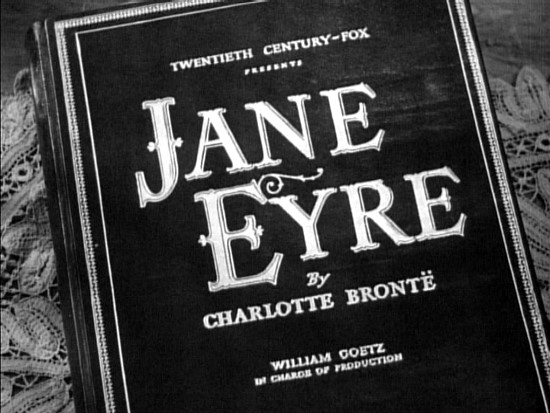
JANE EYRE
DEATH OF A SALESMAN BY ARTHUR MILLER
DEATH OF A SALESMAN
AND THE SOCRATIC SEMINAR
This method is known as the Socratic Seminar, named for the famous Socrates. Socrates was a famous Greek philosopher. His method of teaching encouraged students to question everything. The Greek government became uneasy with this method, for when people begin to question everything, they are no longer blinded by what they are told. Instead, they look at everything with a critical eye. Because Socrates’ methods made the Greek government nervous, they sentenced him to death. His death sentence was to drink a poisoned drink (hemlock). One of his students was so inspired by Socrates, that he dedicated his life to writing down everything Socrates ever said – that student was Plato. Today, thousands of years later, we realize how brilliant his methods were. What we’re going to embark on the next couple days is based on Socrates' methods – the Socratic Seminar.
Seminar Reflection:
1. What do you think the value is of Death of a Salesman?
2. What did you learn from this seminar?
3. How did you feel about this seminar?
Monday, May 19, 2008
Summer Assignment #2
Summer Reading Allusions to the Bible:
Much of what we read in Western Literature refers to either Mythological or Biblical Allusions therefore; it is critical for you to understand Biblical Allusions.
You are responsible for turning the following Biblical Allusions on the second day of school. Not completing these tasks fully or completing them at a level unsuitable for AP will result in your automatically being removed from the course. Remember we are not focusing on religion but, the Bible as it focuses on Literature. This assignment must be in MLA format.
FAMILIARITY WITH THE BIBLICAL/RELIGIOUS ALLUSION.
IDENTIFY AND EXPLAIN AT LENGTH THE FOLLOWING. GIVE THE SIGNIFICANCE OF THE EVENT:
-THE FALL
-THE FLOOD
-THE CREATION
-THE MARK OF CAIN
-LOT AND HIS WIFE
-SODOM AND GOMORRAH
-THE NATIVITY
-LAZARUS
-THE CRUCIFIXION
-THE DENIAL
-THIRTY PIECES OF SILVER
-DAVID AND GOLIATH (PHILISTINES)
-BUDDHA/BUDDHISM
-GOLGOTHA
-THE PRODIGAL SON
-REVELATIONS (FOUR HORSEMENT, NUMBER OF THE BEAST, ETC.)
-JONAH AND THE WHALE
-SAMSON AND DELILAH
-MOSES AND THE FLIGHT FROM SLAVERY IN EGYPT
Subscribe to:
Comments (Atom)